
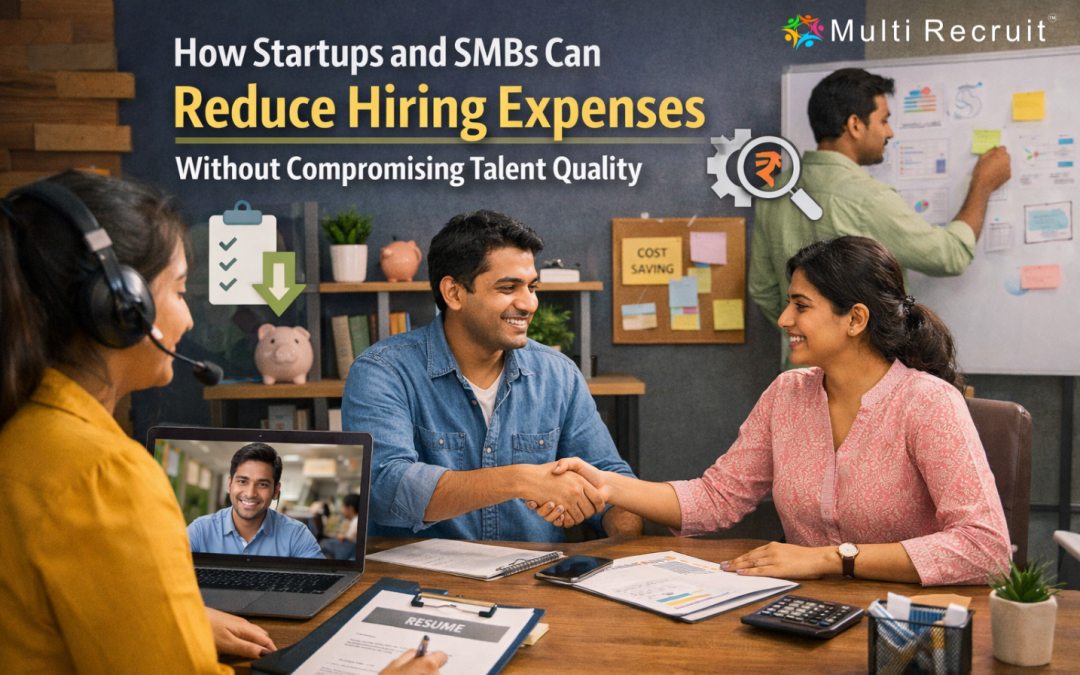
For startups and small to mid-sized businesses, hiring is often a balancing act. On one side are tight budgets and pressure to control hiring expenses. On the other is the need to bring in capable professionals who can contribute from day one. Cutting corners in recruitment may seem tempting, but poor hiring decisions usually lead to higher long-term costs through attrition, productivity loss, and repeated hiring cycles.
The good news is that reducing hiring expenses does not require lowering standards. With the right approach, startups and SMBs can make smarter decisions, streamline processes, and maintain high-quality talent.
Understand where hiring expenses actually come from
Before reducing recruitment spend, it is important to understand what drives it. Hiring costs are not limited to recruiter fees or job postings. They include time spent by founders and managers, extended vacancy periods, repeated interviews, and the impact of wrong hires.
Many growing businesses rely on ad-hoc hiring methods. These approaches often lack structure, leading to inefficiencies and longer time-to-hire. Investing in clear recruitment solutions that address the entire process helps identify and remove unnecessary cost drivers early.
Focus on role clarity and realistic hiring plans
One of the most common reasons hiring expenses spiral is unclear role definition. When job requirements are vague or constantly changing, candidate screening becomes inefficient, and interview rounds increase.
Startups and SMBs benefit from defining responsibilities, must-have skills, and performance expectations upfront. This clarity improves candidate matching and reduces interview cycles. Structured hiring solutions aligned with business goals allow teams to hire with intent rather than urgency.
Improve sourcing quality instead of sourcing volume
Posting roles across multiple platforms and screening hundreds of applications may feel proactive, but it often increases costs. High-volume sourcing creates screening fatigue and leads to missed high-quality candidates.
Targeted sourcing strategies work better for growing companies. Using curated talent pools and referral-driven pipelines improves candidate relevance. Partnering with a recruitment company experienced across IT, BFSI, and e-Commerce hiring can significantly reduce sourcing noise while maintaining quality.
Use structured screening to avoid costly mis-hires
A bad hire can cost far more than the recruitment process itself. Poor screening leads to early attrition, team disruption, and repeat hiring efforts.
Structured screening frameworks help address this challenge. Skill-based assessments, role-specific evaluations, and standardised interview criteria reduce subjectivity. Businesses that adopt talent acquisition solutions with built-in evaluation frameworks often see better hiring accuracy and lower long-term costs.
Balance in-house hiring with external expertise
Building a full in-house recruitment team may not be feasible for startups and SMBs. At the same time, relying entirely on transactional hiring can limit consistency and control.
A hybrid approach works well. Selective use of contract staffing and project-based recruitment enables businesses to scale hiring efforts without permanent overhead. External partners can manage sourcing and screening while internal teams focus on culture fit and final decisions. This balance helps maintain speed and quality without stretching internal resources.
Reduce time-to-hire with process efficiency
Extended hiring cycles increase costs in multiple ways. Open roles impact productivity, increase workload on existing teams, and often lead to rushed decisions.
Streamlining recruitment workflows is essential. Clear approval processes, predefined interview stages, and faster feedback loops help reduce delays. Businesses using full-cycle talent acquisition models benefit from coordinated hiring stages that minimise drop-offs and idle time.
Plan for long-term talent needs, not just immediate roles
Reactive hiring is expensive. When teams hire only to fill immediate gaps, they miss opportunities to build sustainable pipelines.
Strategic workforce planning helps reduce repeated sourcing efforts. Aligning hiring with growth plans allows companies to anticipate skill needs and prepare in advance. This approach is especially effective when supported by end-to-end talent acquisition frameworks that connect workforce planning, sourcing, and onboarding.
Choose partners with market and regional expertise
For businesses hiring in India, local market understanding plays a critical role in cost control. Salary benchmarking, talent availability, and regional preferences influence hiring outcomes.
Working with providers that offer recruitment services in India ensures better alignment with market realities. Local expertise reduces mismatches, shortens hiring cycles, and improves candidate retention, thereby lowering overall hiring costs.
Build consistency through scalable hiring models
As startups grow, hiring volumes increase. Without scalable processes, costs rise unevenly. Consistency in hiring frameworks ensures that quality does not drop as volumes go up.
Scalable end-to-end talent acquisition models allow businesses to adapt hiring intensity without redesigning processes each time. This approach supports long-term hiring across roles such as Full Stack Development, Cloud Architect, and Data Scientist positions.
Measure outcomes, not just cost per hire
Reducing hiring expenses should not focus only on short-term savings. Metrics such as retention rate, performance after six months, and hiring manager satisfaction provide a clearer picture of recruitment effectiveness.
Organisations that track these outcomes are better positioned to refine processes and invest in areas that deliver real value. Over time, structured talent acquisition solutions reduce total hiring expenses while supporting stronger teams.
Build Cost-Effective Hiring with Multi Recruit
Hiring smarter requires structure, consistency, and the right mix of technology and human judgment. Multi Recruit works with startups and SMBs as a long-term hiring partner, helping them control recruitment costs while ensuring every hire adds real value to the business.
With experience across multiple industries, including Healthcare, Retail, Media & Communication, and Real Estate, Multi Recruit delivers flexible recruitment models designed for growing teams. From targeted sourcing and structured screening to full-cycle talent acquisition, our approach reduces time-to-hire, avoids costly mis-hires, and adapts seamlessly to changing hiring volumes.
Whether you need support for a single critical role or an ongoing hiring program, Multi Recruit provides clarity, control, and predictable outcomes, so you can focus on building your business with confidence.
Explore how our recruitment solutions can support your growth:
https://www.multirecruit.com/employer/recruitment-solution/