
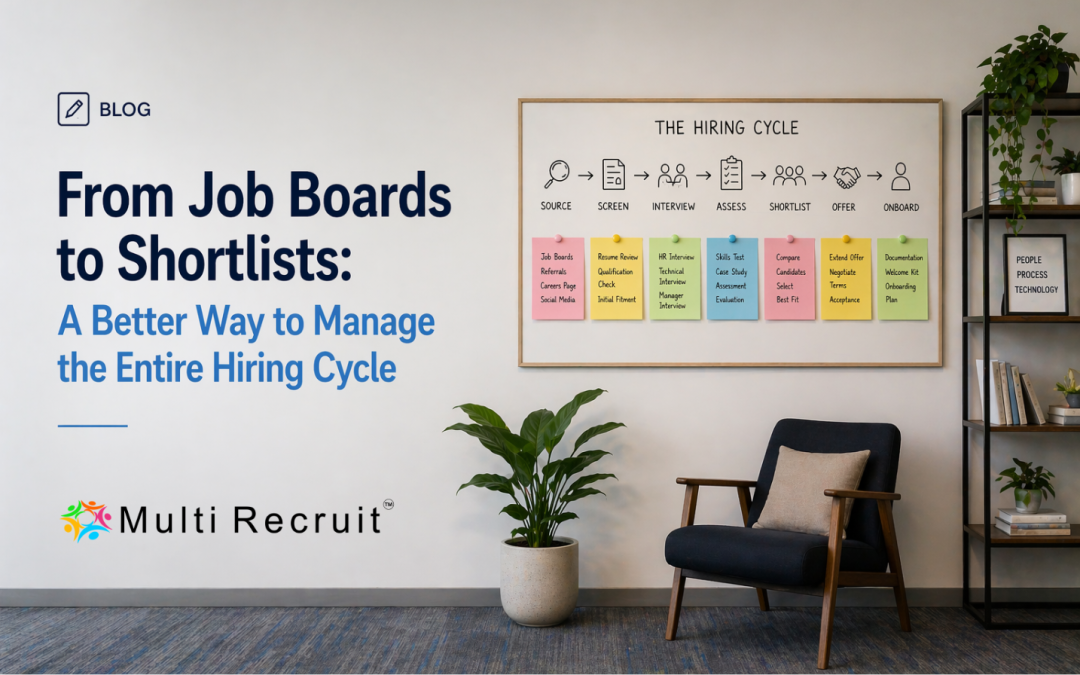
Still, many organisations operate with disconnected processes that slow them down. Recruiters source candidates from multiple platforms, hiring managers rely on inconsistent evaluation methods, and decision-making often lacks real-time data. The result is a hiring cycle that feels reactive rather than strategic.
To build a reliable talent pipeline, companies need a structured system that connects every stage of hiring, from sourcing to shortlisting, into one cohesive workflow. A modern hiring approach focuses on visibility, consistency, and speed, ensuring that the right candidates move through the funnel without friction.
The Shift from Fragmented Hiring to Integrated Systems
Traditional hiring methods often rely heavily on job boards. While they remain useful, they represent only one part of the sourcing strategy. High-performing organisations expand beyond these channels, combining proactive sourcing, talent mapping, and employer branding to attract stronger candidates.
An integrated hiring system ensures that sourcing, screening, and evaluation are not isolated steps but interconnected stages. This is where a recruitment solutions company can bring structure and expertise, helping organisations align their hiring strategy with business goals.
When hiring operates as a single system, teams gain better control over candidate flow, reduce duplication of efforts, and improve collaboration across departments.
Smarter Sourcing Beyond Job Boards
Relying solely on job boards limits access to active job seekers. Many of the best candidates are passive and require targeted outreach. A well-designed sourcing strategy includes multiple touchpoints:
- Professional networks and referrals
- Talent communities and internal databases
- Industry-specific platforms
- Strategic partnerships with a recruitment partner
Companies that invest in diversified sourcing methods create a stronger talent pool. This approach is particularly valuable for roles such as Mobile Development, Cloud Architect, or Data Scientist, where competition is high.
Additionally, organisations building global teams or expanding through GCC recruitment benefit from structured sourcing strategies that align with local talent markets while maintaining global standards.
Bringing Structure to Screening and Evaluation
Once candidates enter the pipeline, consistency becomes critical. Without a structured screening process, hiring decisions can vary widely between teams, leading to inefficiencies and potential bias.
A refined evaluation framework ensures that every candidate is assessed against clearly defined criteria. Many organisations are adopting video interviewing to standardise early-stage assessments, enabling faster and more objective decision-making. Structured screening involves:
- Defined role-based competencies
- Standardised interview formats
- Consistent evaluation scorecards
This level of alignment helps hiring teams move forward with confidence, reducing delays caused by uncertainty or miscommunication.
Data-Driven Shortlisting for Faster Decisions
Shortlisting is where many hiring processes lose momentum. Delays often occur due to unclear priorities, insufficient data, or too many stakeholders involved without a clear framework.
A data-driven approach transforms shortlisting into a faster and more precise process. By leveraging analytics, recruiters can identify top candidates based on measurable factors such as skills match, experience relevance, and interview performance.
Working with a hiring solutions provider enables organisations to implement systems that support real-time insights and automated workflows. This ensures that hiring managers receive curated shortlists rather than an overwhelming number of profiles.
The outcome is a more efficient decision-making process that reduces time-to-hire while improving candidate quality.
Seamless Collaboration Across Teams
Hiring involves multiple stakeholders, including recruiters, hiring managers, HR leaders, and, at times, external partners. Without clear coordination, communication gaps can slow down the entire process.
An integrated hiring system creates transparency at every stage. Everyone involved has access to the same information, timelines, and candidate updates. This alignment helps teams stay on track and make informed decisions without unnecessary back-and-forth.
Organisations leveraging end-to-end recruitment solutions often experience improved collaboration because their processes are designed to support cross-functional workflows from the start.
Adapting Hiring Strategies Across Industries
Different industries require tailored hiring approaches. For example:
- The IT sector demands speed and technical precision
- BFSI prioritises compliance and risk assessment
- Healthcare focuses on specialised qualifications and certifications
A recruitment company with industry-specific expertise can customise hiring strategies to meet these unique requirements. This ensures that organisations are not using a one-size-fits-all approach but instead adapting their processes to suit their talent needs.
Similarly, businesses scaling rapidly or managing project-based work can benefit from flexible models like contract staffing, which provide access to skilled professionals without long-term commitments.
Building a Consistent Hiring Engine
A well-managed hiring cycle functions as a continuous pipeline rather than a series of isolated activities. Companies that succeed in hiring consistently focus on:
- Aligning sourcing strategies with business objectives
- Standardising evaluation frameworks
- Leveraging technology for efficiency
- Maintaining clear communication across teams
Partnering with a recruitment services company allows organisations to implement these practices effectively. With the right systems in place, hiring becomes predictable, scalable, and aligned with long-term growth.
Turning Hiring into a Strategic Advantage
Managing the entire hiring cycle effectively requires more than tools or individual efforts. It requires a structured approach that connects sourcing, screening, and shortlisting into a unified system.
Organisations that embrace this model gain a competitive advantage by reducing hiring timelines, improving candidate quality, and creating a seamless experience for both candidates and hiring teams.
A strong hiring framework supports business growth by ensuring that talent acquisition remains consistent, efficient, and aligned with organisational goals.
Get in Touch with Multi Recruit
Looking to streamline your hiring process and build a stronger talent pipeline?
Multi Recruit offers tailored solutions as a trusted recruitment solutions company delivering end-to-end recruitment solutions for growing businesses.
Connect with us today to transform your hiring strategy:
https://www.multirecruit.com/contact-us/